Imagine
‘Not to imagine God’s future is to cede it to those who imagine a lesser thing,’ says Paul Bayes.

DLT Writing for You: an Intelligent, Inspirational, Inclusive newsletter from Darton, Longman and Todd
Contents
Imagine
Paul Bayes

‘Not to imagine God’s future is to cede it to those who imagine a lesser thing,’ says Paul Bayes, the former Bishop of Liverpool.
In my years in Liverpool, the logo of the local airport, named after John Lennon, included some words from Lennon‘s most famous song Imagine: ‘above us only sky’. Now, its strapline is ‘faster, easier, friendlier’. Although the earlier quotation didn’t necessarily inspire confidence for me as a flyer, I was delighted that it was there. The present wording seems… well, a little more corporate.
Not that there’s anything wrong with being fast, easy and friendly, at least not if you’re an airport. But ‘above us only sky’ speaks to the imagination, as the whole of Lennon’s song does, and as so little does in our public discourse at the moment. It was good to see an airport offering mystery.
In 2009, as part of an arts festival, the bells of Liverpool Cathedral chimed out the melody of ‘Imagine’. This caught the imagination of the city and was overwhelmingly popular, feeding a sense that the church saw depth in what spoke deeply to the people. Inevitably, though, the Dean (one Justin Welby) received a measure of finger-wagging criticism from parts of the Christian community. After all, the argument ran, ‘Imagine’ is an explicitly atheist song. Why give a platform to such an ungodly thing?
I’m composing this piece on my iPhone, having forgotten my laptop whilst travelling (I don’t recommend the experience). But at least this means that each time I re-open the piece, the home screen on my iPhone is to be seen. At the moment it’s a photograph of the east window of Saint Martin in the Fields, that wonderful semi-abstract depiction of the Cross by Iranian artist Shirazeh Houshiary. with the world outside seen through clear and feathered glass, a piece asserting nothing and yet containing everything.
This window was imagined into being by someone whose faith-influence is predominantly Sufi mysticism. And it points to the mystery of God, at least for me, in a most precise and moving way.
Again, on the west wall of Liverpool Cathedral is a neon artwork by Tracey Emin, ‘I felt you and I knew you loved me’. Whatever she may have had in mind when creating this piece, in its present context it points to love in the radically widest sense, including the love of God.
No one has ever seen God. So whenever we speak of God we draw on human analogy, and on the analogy of human love most of all. And if Jesus Christ really is fully human and fully divine then God really is involved in everything human, including the human imagination. If this is so, then works of art which provoke the imagination should be celebrated, and commissioned and commended, and used unashamedly by the Christian community.
God knows we need to be provoked in these days. In May 1968 in Paris, in the midst of the uprisings there, a slogan came to prominence: ‘L’imagination au pouvoir’ (All power to the imagination). That was a utopian time, and like most utopias it collapsed quickly. And yet, in these transactional and profoundly unimaginative days, I want to honour the thinking that gives power to the imagination, which like everything else is intimately to do with God, the God whose love sustains the world at every moment.
When Rowan Williams was introduced as the new Archbishop of Canterbury in 2002, he ended his initial remarks with these words: ‘And if there is one thing I long for above all else, it is that the years to come will see Christianity in this country able to capture the imagination of our culture, to draw the strongest energies of our thinking and feeling into the exploration of what our creeds put before us.’ I hope and pray that that longing is widely shared. Certainly I share it.
Imagining a better future is crucial when human celebration is turned to an incomprehensible tragedy, as happened in Liverpool recently. It’s needed when an angry illiberalism seems to be triumphing in place after place. All of the capacities of the human being, most notably the human imagination, must be brought to bear in the service of a community that values and honours difference and richness and depth.
In order for evil to triumph, all that is needed is that good people do nothing. But maybe people do nothing because they/we have lost sight of the values that sustain action. We have lost sight of the vision of shalom, of the overarching and all-inclusive peace, of a diverse, nurturing, stretching, brave, strong, kind society. Such a vision demands practical intelligence of course, but if it is to gain any purchase on the will and the mind, it demands imagination.
Not to imagine God’s future is to cede it to those who imagine a lesser thing. For those of us in the Church of England, not to imagine holy ground in England is to surrender to a false nostalgia for monochrome days which never existed, and to collude in a ruthless marginalising of vulnerable minorities in the quest for power through the offer of an illusory security.
In my retirement, I’ve been reflecting on these things. Some of the fruit of that reflection is in a forthcoming book, The Door. It’s a book of fragments, because my own life has become fragmented and because we live in fragmented times. But it may be that fragments are what we need, so that each of us can construct a mosaic of the imagination which will nourish us and motivate us to action.
For Christian people our nourishment and our provocation will be an imaginative response to scripture and to the long history of Christian faithfulness. But it will also be a response to the culture which surrounds us, the sea in which we swim, the gift of God to each of us.
Well, you may say I’m a dreamer. But I’m not the only one.
Paul Bayes is a retired Anglican bishop. For eight years he served as Bishop of Liverpool, from 2014 to 2022.
His new book, The Door: Fragments of the Love of God, will be published in September 2025. You can pre-order a copy here.

You can order Paul Bayes’ previous book, The Table: Knowing Jesus – Prayer, Friendship, Justice here, either by itself or as part of a 3 for 2 deal. Every purchase made through the DLT Writing for You website will generate a royalty for the author and for the Inclusive Church network.
Questions are the Answer
David Hayward
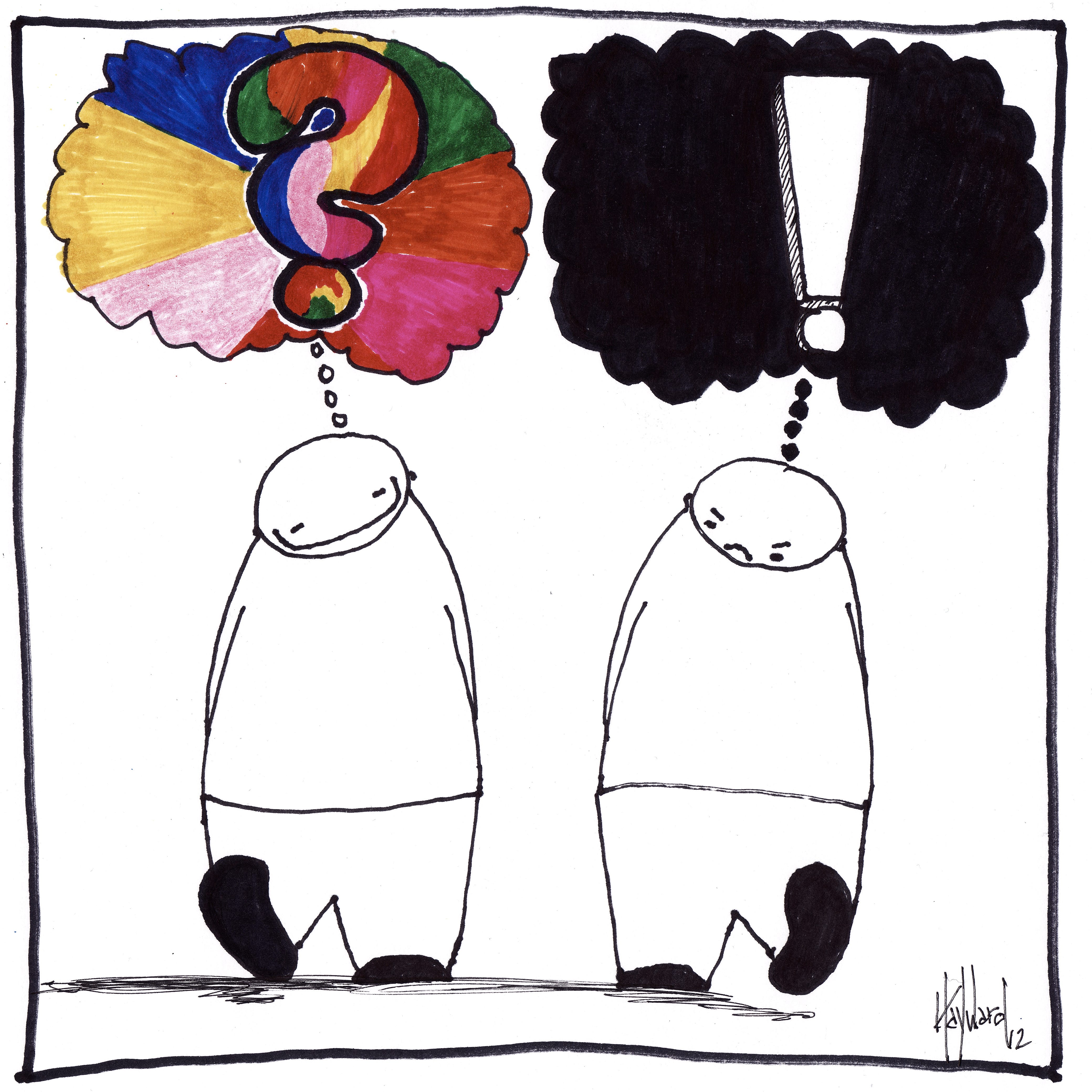
Find many more of David Hayward’s cartoons in Questions are the Answer: nakedpastor and the Search for Understanding.
News from DLT
David Moloney
The editorial department of DLT has been a bit poorly these last couple of weeks. Our managing editor Helen incurred a nasty bout of COVID; I’ve had a cold over the last few days that so far doesn’t seem to have developed into anything worse, but it’s made me feel weary. We’ve had little sympathy from either of the editorial cats, Misha and Suki, who have demanded we stay at our desks so they can come and sit on our keyboards – the natural order of things must be maintained.


Thanks to their encouragement we are close to signing off for press a number of really excellent new books for DLT’s autumn list. Paul Bayes introduces his forthcoming new book The Door in the article above; this is a very special book indeed – wise, mature, honest theological thinking for an age in which nuance, informed reflection and, sadly, compassion seem to be increasingly absent from public discourse. Please do pre-order; the book is due to arrive in September.
We also have new books on their way from Margaret Silf, Henry Martin and Stephen Poxon: three very different titles, and each quite brilliant in its own unique way. We’ll be revealing more about each of these in the next few weeks. We have commissioned a very exciting new Lent course for 2026, based on a movie that is going to be hugely enjoyable to watch and discuss in your Lenten study groups. And last week I had coffee with an author who is planning a substantial new edition of one of our bestselling and most important publications of the last few years. More news on all of these soon …
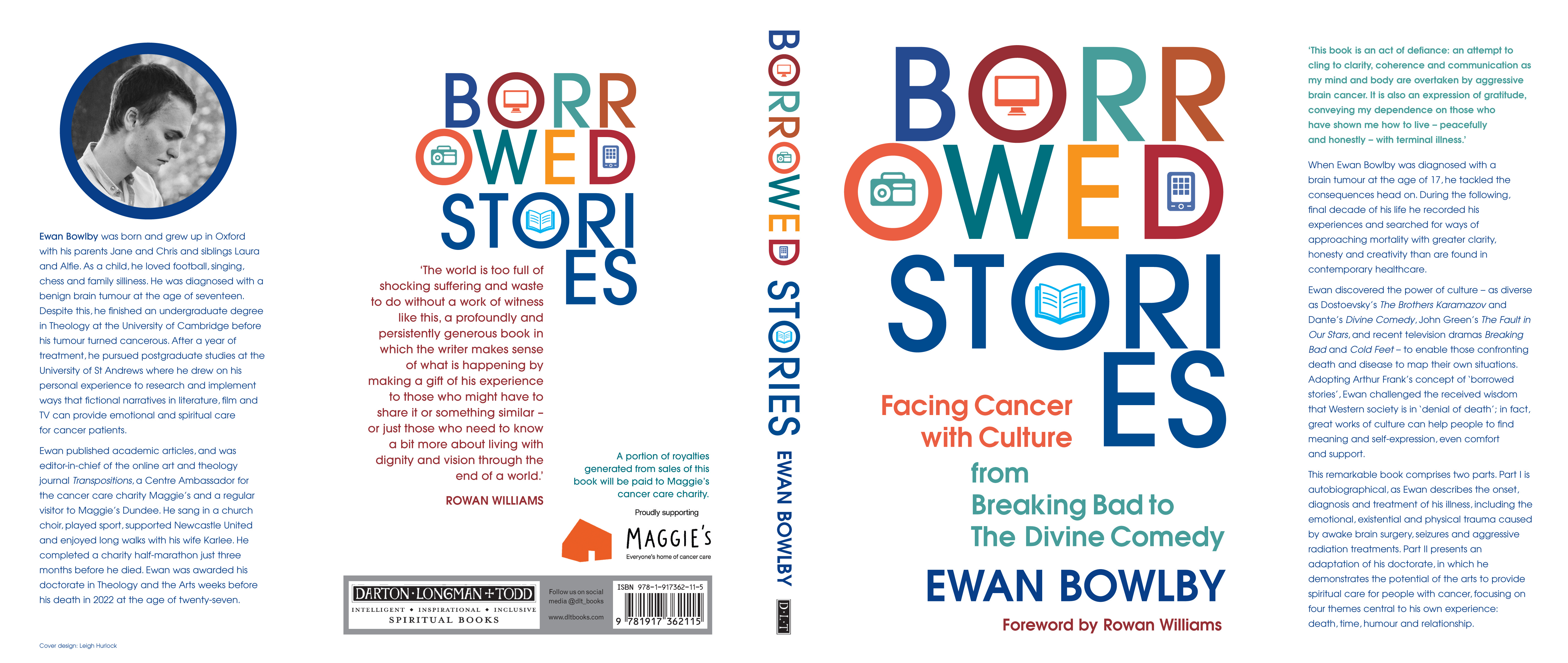
More imminently, in June we will be releasing a superb book by Ewan Bowlby. Some readers of this newsletter may know of Ewan (whose grandfathers were the poet Tony Harrison and a former Bishop of Newcastle, the late Ronnie Bowlby), or even have known him personally, but if not you will meet an impressive character with an impressive mind in Borrowed Stories: Facing Cancer with Culture, from Breaking Bad to The Divine Comedy.
Ewan was diagnosed with a brain tumour at the age of 17, and died a decade later. During those years of illness he studied Theology at Cambridge, then completed an exceptional postgraduate thesis at St Andrews on the ways that fiction and the arts – including Breaking Bad and John Green’s novel The Fault in Our Stars – can provide emotional and spiritual care for those with terminal illness that is not offered by contemporary healthcare. The results of his studies, combined with a short memoir, comprise this exceptional new book which I think should be widely read.
Echoing the thoughts of Paul Bayes in his article above, we should never underestimate the power of story, of creativity, of imagination, to help us make sense of the world. In the world of bookselling, the received wisdom of the last few years seems to have been that people have been retreating into ‘escapist’ fiction; perhaps this is not always an attempt to escape societal trauma, but a quest better to understand it.
We’ll tell you more about Ewan’s Borrowed Stories over the next couple of weeks. You can pre-order a copy here.
News from the Inclusive Church network
Rev’d Chantal Noppen
In the waiting, there is hope.
The ten days between Ascension and Pentecost always strike me as curious. We know the joy and power of Pentecost is coming – that overflowing, uncontainable gift of God’s abundant inclusive love – but first we wait. If Ascension is a moment of loss, of closure and the end of one stage, and Pentecost the start of the new, what is now? We sit in that liminal space, between what was and what is to come.
As an inclusive theologian, I find this waiting time profoundly hopeful. It invites us to pause: to honour the past, feel the tension of the now, and pray toward a more inclusive future. It’s a moment of transition, of letting go, and leaning forward. To allow ourselves to feel, but then leave behind, grief and regret as we seek a brighter, more inclusive, affirming, accessible future where all can be truly valued, within their diversity.
Looking at and into this hopeful future is exactly where Inclusive Church finds itself right now. We’ve just reopened applications for churches to join the network, with nearly thirty new churches to welcome this month. On June 25th at 7.30pm, we’re holding our AGM online, where we’ll launch our new strategy, share our vision, and introduce the seven ambitions guiding our next few years. We’re also embarking on a rebrand, refreshing our logo and visual identity to reflect the breadth and beauty of inclusion. It’s all a dynamic, evolving process but there is a real sense of being on the cusp of something special.
We’d love you to be part of it. Whether you come to the AGM, encourage your church to join, or simply pray with us, now is a good time to lean into hope. Pentecost reminds us that love is for everyone, and that inclusive theology is not just growing, it’s gathering momentum. We are following in the footsteps of those who have gone before us, building on foundations laid over years of advocacy, challenge and learning. The exclusion and discrimination we’ve experienced and mistakes that have been made, are far from the end of the story. There is much to share and celebrate, and the future is looking bright! Let’s embrace the hope and joy we see and be generous with our faith and grace. Come Holy Spirit, our hearts inspire!
(More details at www.inclusive-church.com/agm if you’d like to attend.)


Rev'd Chantal Noppen is the National Coordinator of Inclusive Church
DLT publishes the Inclusive Church Resources – ideal handbooks for churches seeking to be welcoming and open to all. Each book offers a rich and inspiring mix of theological and practical resources, and personal experiences of people who have faced exclusion in church contexts.
Currently there are four books available in the series, on Disability, Ethnicity, Gender and Poverty. Follow the links to see more, and please remember - every purchase made through the DLT Writing for You website will generate an additional royalty for the Inclusive Church network.


10 Second Sermons
Milton Jones
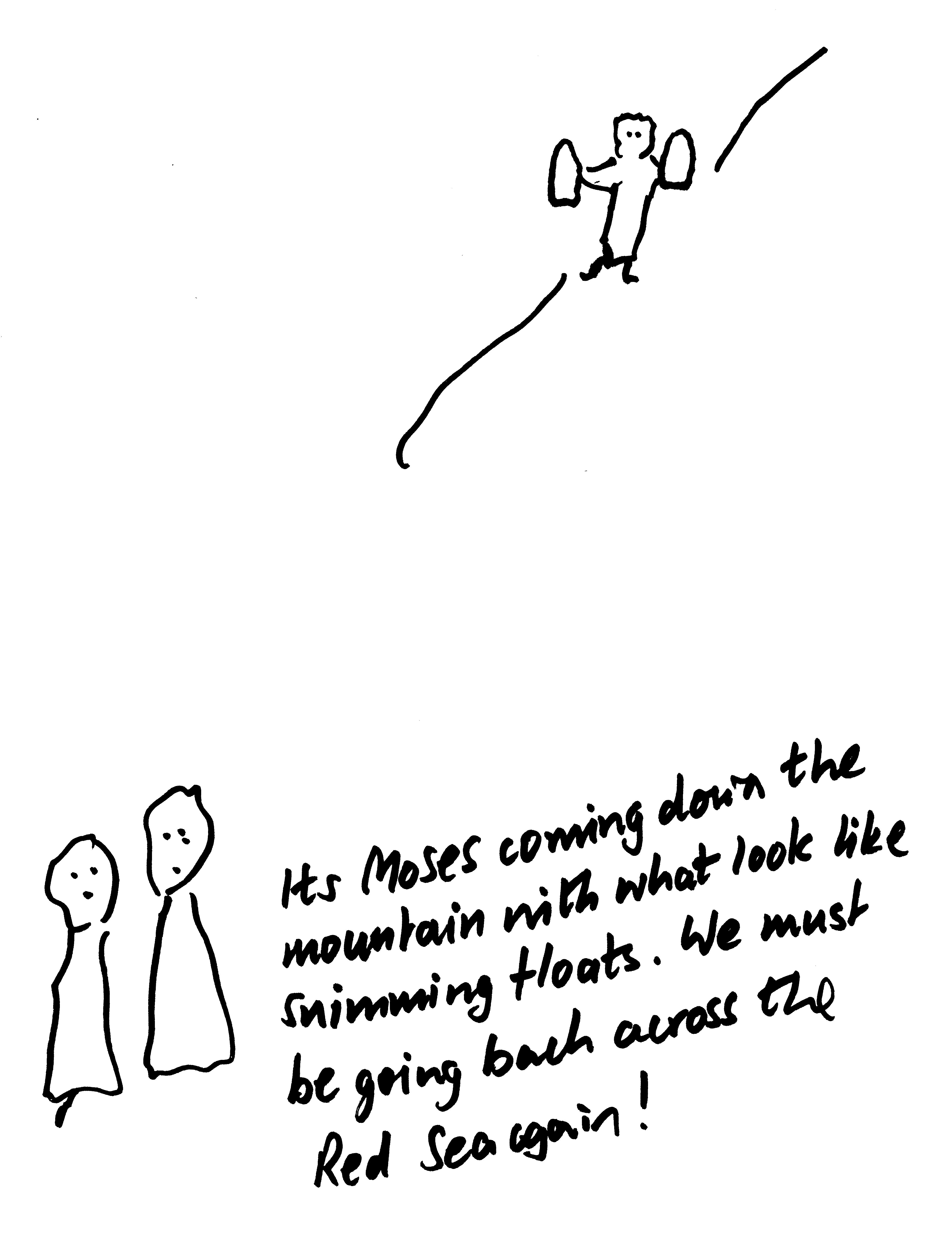
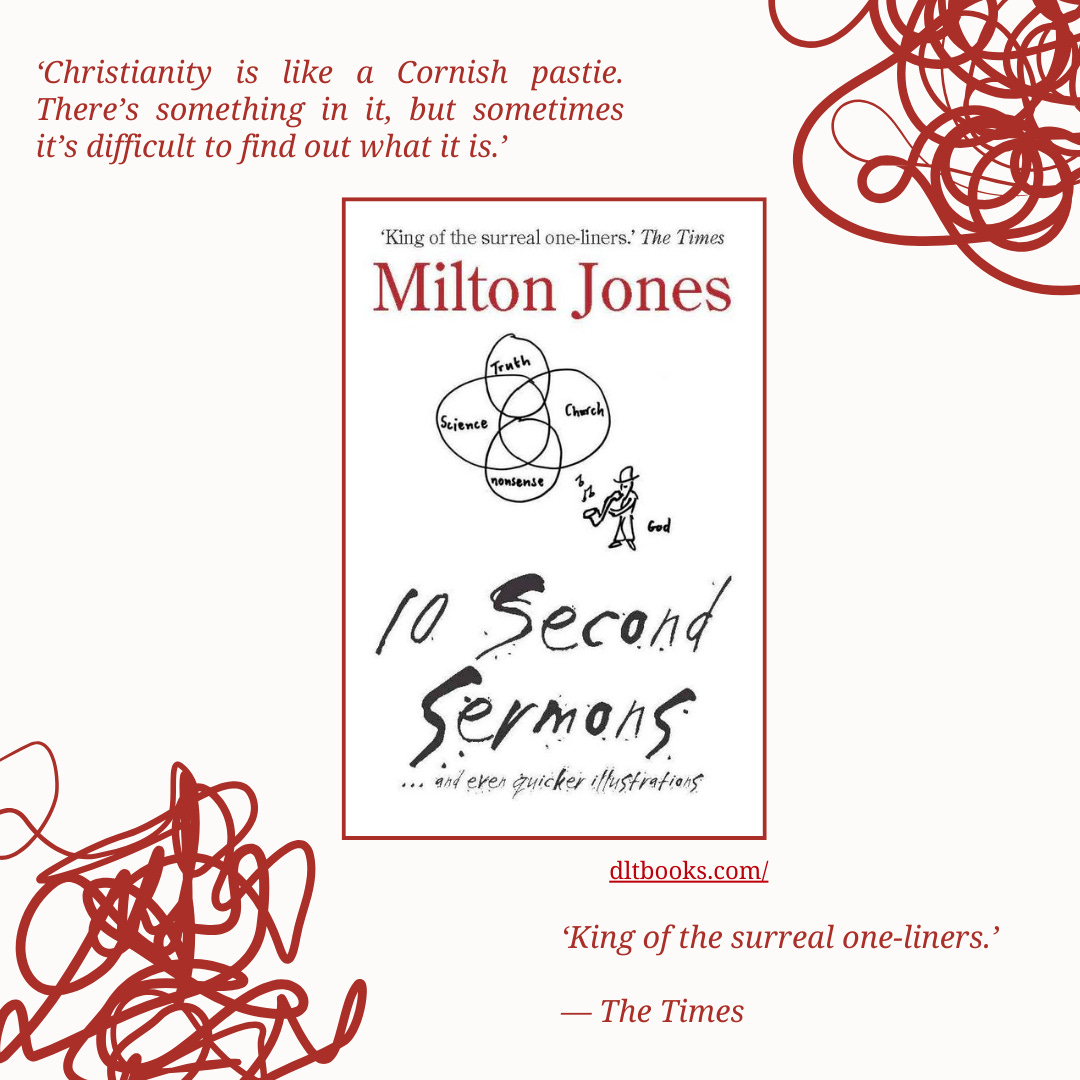
Milton Jones further dissects the great pastie of faith in 10 Second Sermons: … and even quicker illustrations and Even More Concise 10 Second Sermons.
Puzzles
Not Quite Write
Stephen Poxon
Complete the Bible passage (Jerusalem Bible):
In meadows of _____ grass he lets me lie. (In Brighton, possibly; a novel idea.)
Answer below.
Stephen Poxon compiled and edited A Pleasant Year with Father Brown: 365 Daily Readings in the Company of G. K. Chesterton’s Priest Detective.
Clerical Errors
Thomas a Quiznas
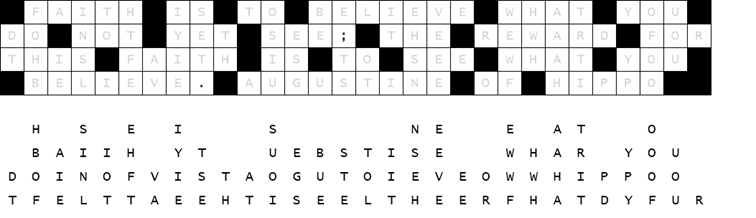
Oh no! The letters have fallen from their squares into piles below. Can you put them back to discover which animal doesn’t need glasses?
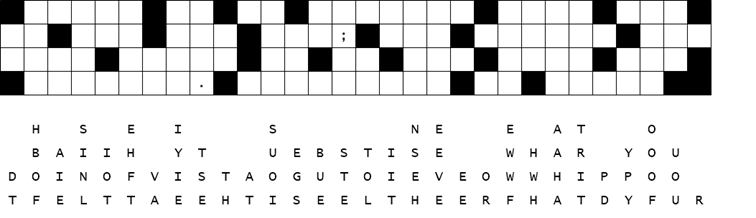
Answer below.
The fiendish puzzles of Thomas a Quiznas were discovered by Fay Rowland, author of 40 Days with Labyrinths: Spiritual reflections with labyrinths to ‘walk’, colour or decorate
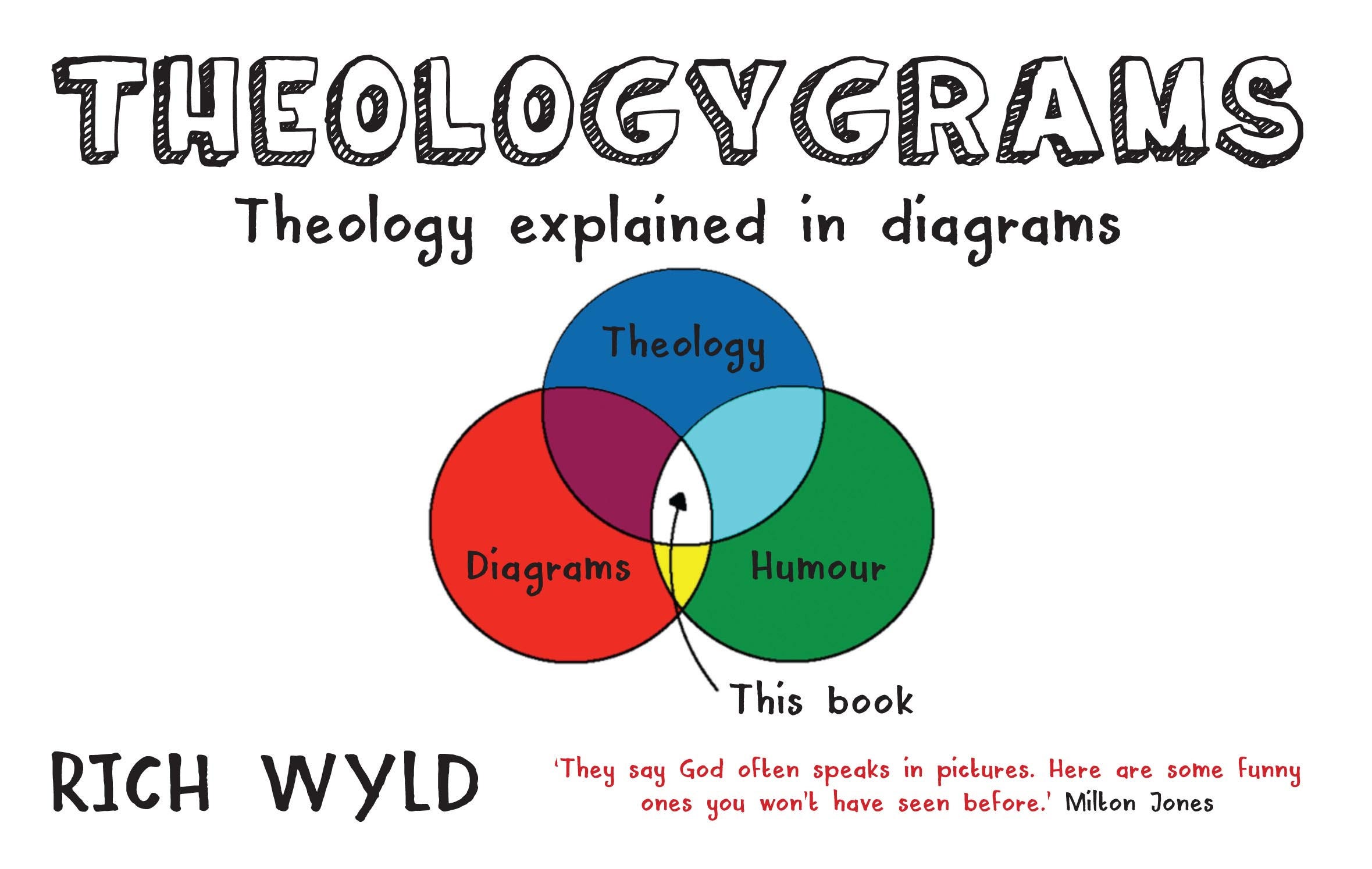
Theologygrams
Rich Wyld
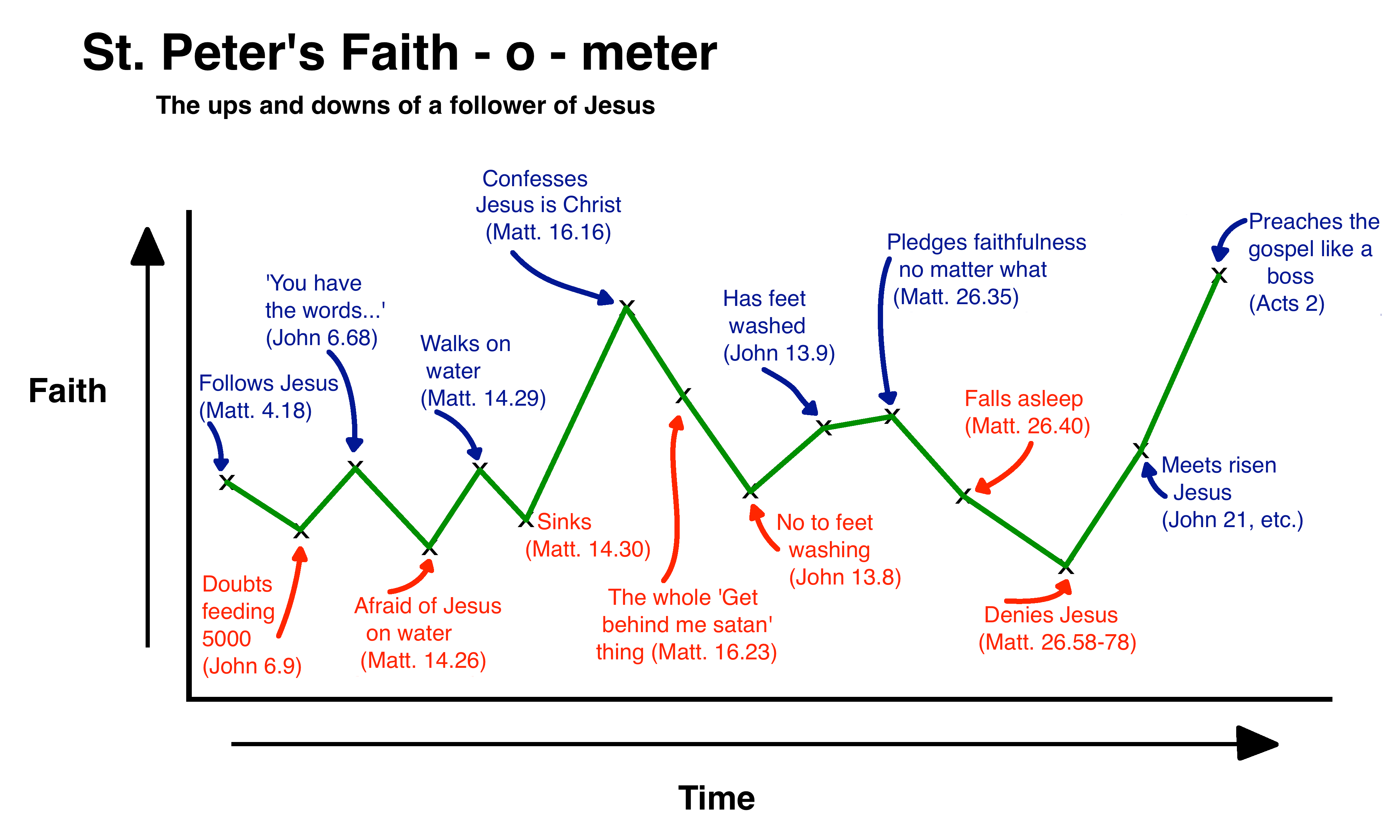
Discover more of Rich Wyld’s work in Theologygrams: Theology Explained in Diagrams and The World According to Theologygrams: Making Sense of Christianity through Badly-Drawn Diagrams.
Puzzle Answers
Not Quite Write: green (Psalm 23:2)
Clerical Errors: Faith is to believe what you do not yet see; the reward for this faith is to see what you believe. Augustine of Hippo